
When I was diagnosed with Type 1 diabetes in 2024, I discovered something surprising.
There is no shortage of information. There is, however, a shortage of context.
Every search result explained one small piece of the puzzle: insulin, A1C, CGMs, carbohydrates, glucagon, autoimmune disease, beta cells, hypoglycemia, clinical trials. But understanding how those pieces fit together—and why they mattered—was much harder.
As a product manager, that felt like a familiar problem.
Good products don't just provide information. They help people build a mental model.
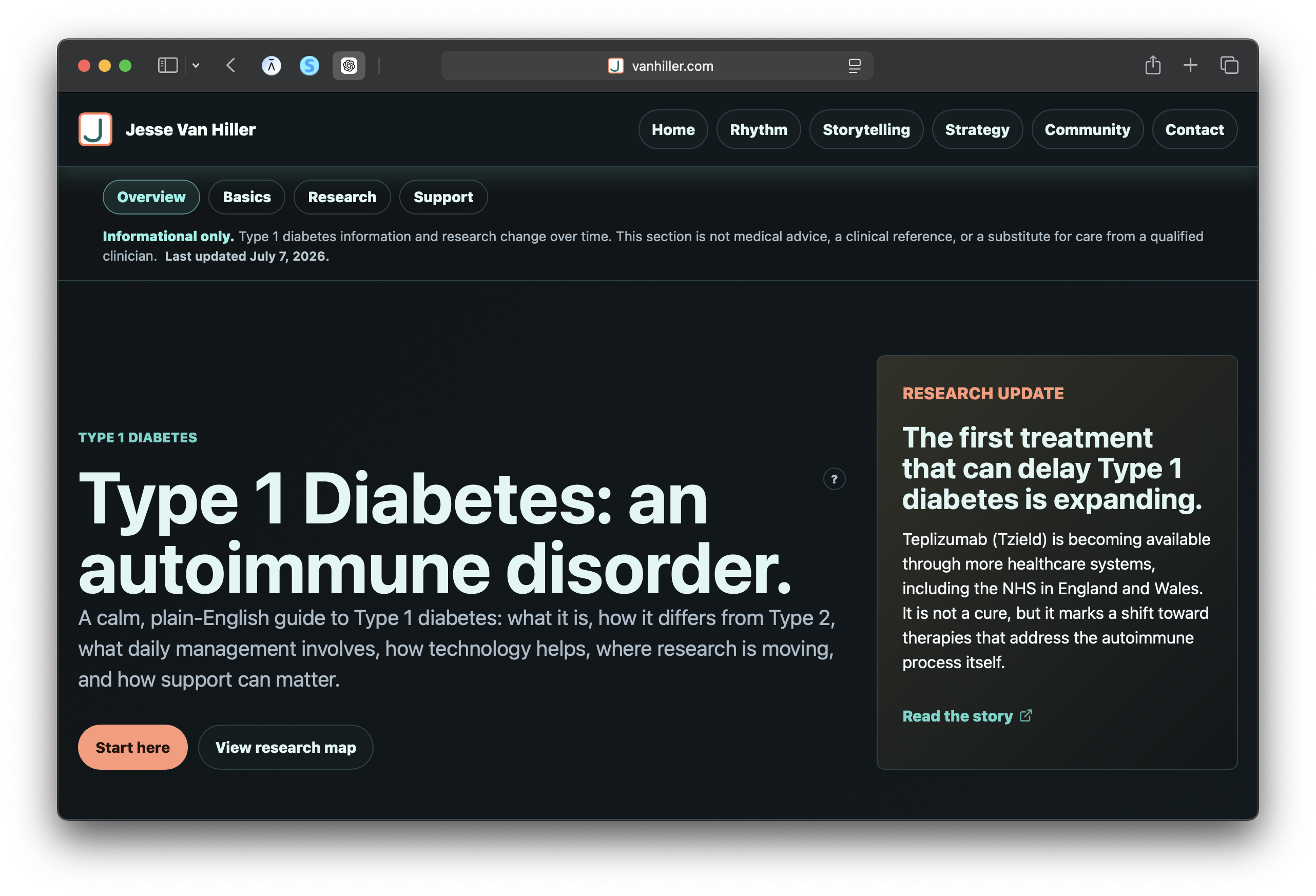
Over the past few weeks, I've been building a small educational microsite about Type 1 diabetes. Rather than functioning as a medical encyclopedia, the site is organized around the questions someone newly diagnosed—or supporting someone who is—might naturally ask.
-
What exactly is Type 1 diabetes?
-
How is it different from Type 2 diabetes?
-
Why is insulin necessary?
-
What are the pancreas and liver actually doing?
-
How do insulin and glucagon work together?
-
What does daily management really look like?
-
Where is research heading?
-
How can friends, family, and coworkers better understand the condition?
The challenge has been finding the right balance between scientific accuracy and accessibility. I wanted to explain concepts like beta cells, islets of Langerhans, autoimmune disease, and glucose regulation without requiring a biology degree. Every page is written in plain English, supported by diagrams, references, and links to trusted organizations.
One section I'm especially excited about is the research landscape. Rather than chasing headlines about "the next cure," it organizes today's work into six major areas: early detection, disease modification, cell replacement, immune protection, automation, and the long-term pursuit of a functional cure. Seeing those efforts together paints a much clearer picture of where the field is moving.
This project has also reminded me why I enjoy product management. Whether you're building software, an enterprise platform, or an educational website, the work is fundamentally the same: understand your users, organize complexity, reduce cognitive load, and help people make better decisions.
The microsite is still very much a work in progress. Next up are expanded sections on Type 1 diabetes research, support resources, treatment technologies, and interactive visualizations to help explain the physiology behind the disease.
If it helps even one newly diagnosed family feel a little less overwhelmed, it'll be well worth the effort.